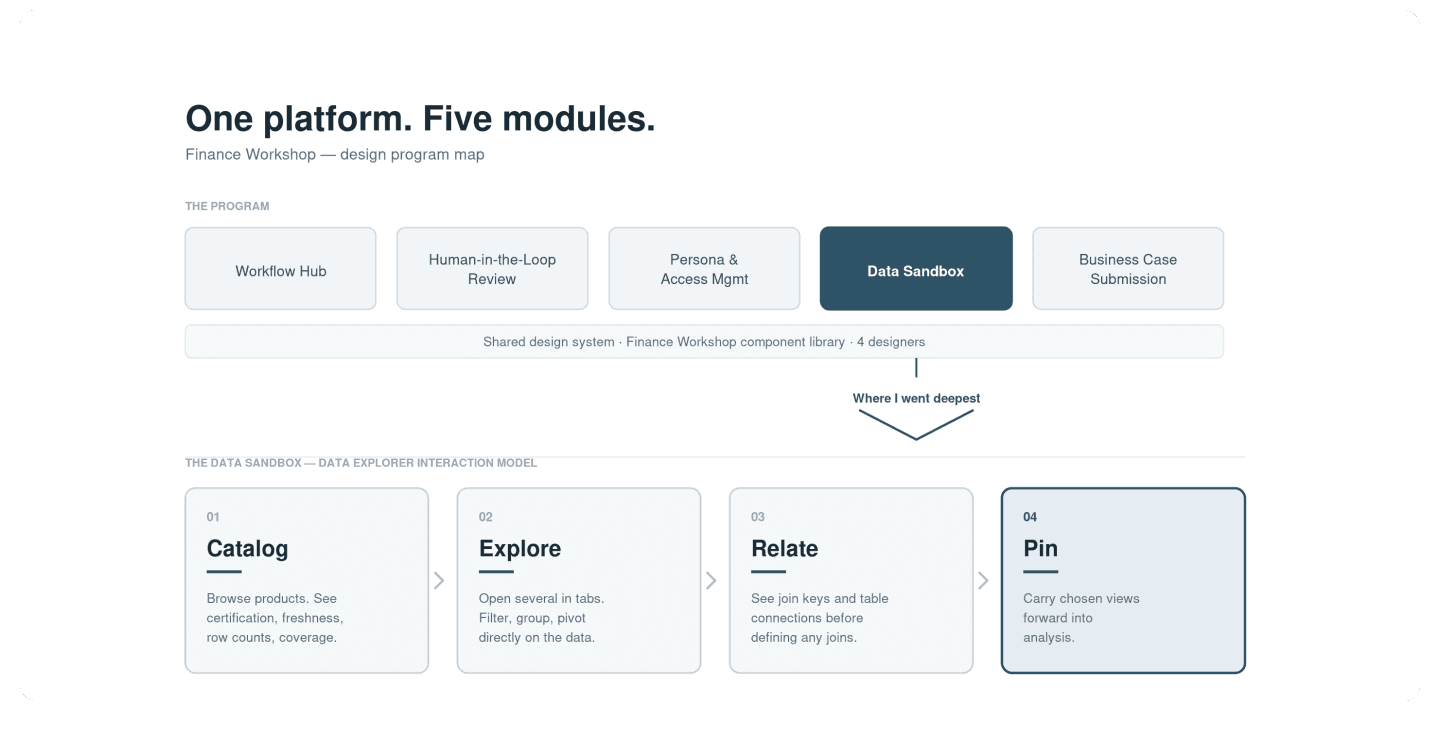
When procurement feels like shopping
A procurement tool built in the early 2000s that nobody wanted to use. I rebuilt it from the ground up and made adoption take care of itself.

AT&T’s platform and data are proprietary. All screens recreated from the originals — branding removed, data synthetic.
Role
Sole UX Designer, embedded in a scrum team of 4 developers
Scope
AT&T's internal software & hardware procurement platform — 5 products → 45
Outcome
3,500 monthly orders, now AT&T's primary procurement platform, company-wide
THE PROBLEM
Dated, and more complicated than it needed to be
Employees needing software or licenses had to fight a system that looked and felt every bit its age. Product owners also wanted to expand scope — from leased hardware into software licenses and productivity tools — which meant modernizing and scaling at the same time.
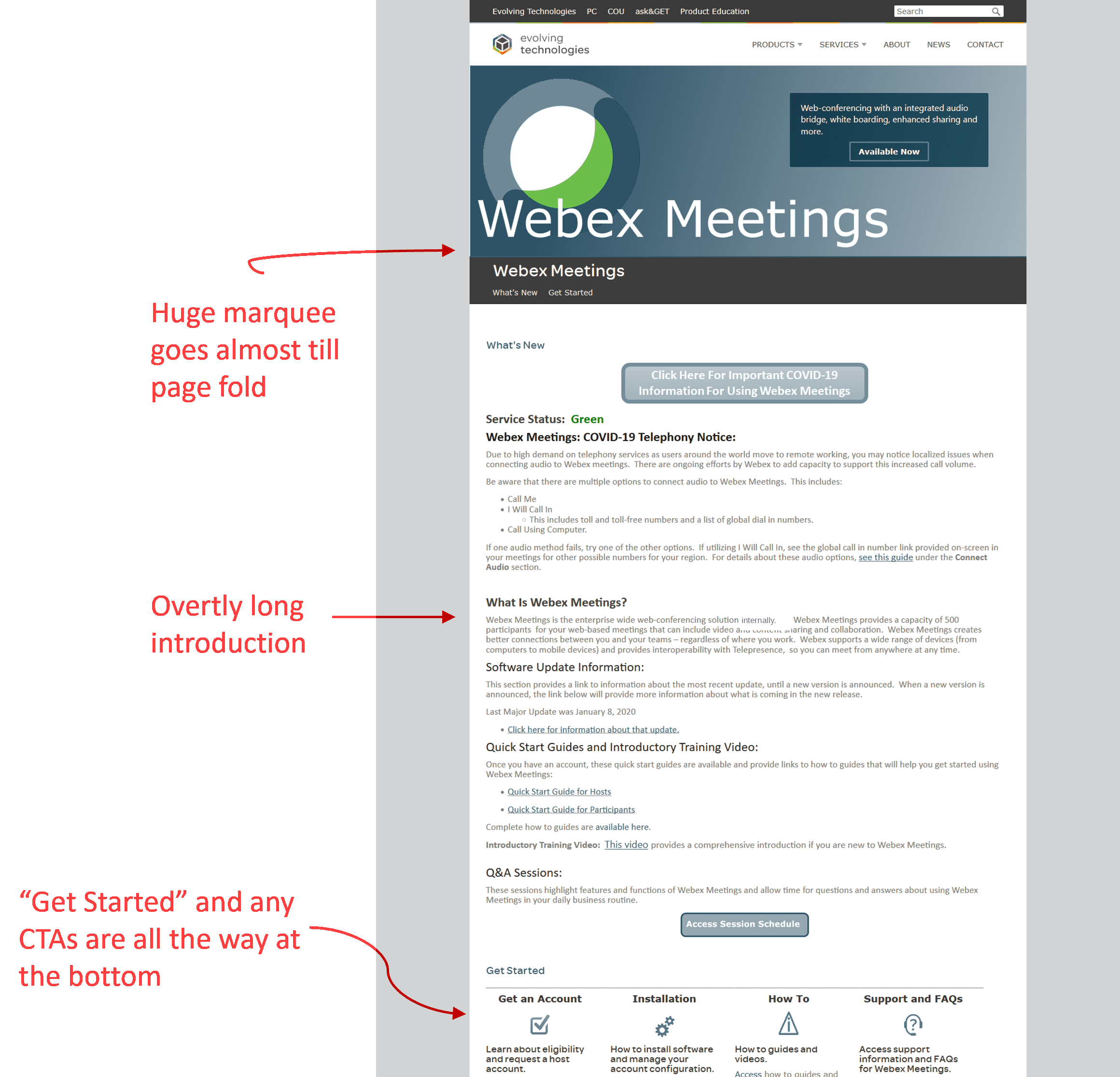
THE PIVOT
Borrowing from how Amazon thinks about shopping
Employees needing software or licenses had to fight a system that looked and felt every bit its age. Product owners also wanted to expand scope — from leased hardware into software licenses and productivity tools — which meant modernizing and scaling at the same time.

We tried…
The legacy system had accumulated complexity over years of incremental additions, never designed as a coherent whole.
Why it failed…
Employees avoided it — requesting even basic tools took more steps than it should have, with nothing to help them understand what was available.
Instead…
Applied consumer e-commerce patterns — a navigable catalog, a streamlined request flow — to scale from 5 products to 45 without adding friction.
THE EXPANSION
From reactive to proactive
The recommendation layer turned repeat visits into deeper engagement, reducing the discovery burden and surfacing tools users hadn't known to look for.

Default state: Popular tools
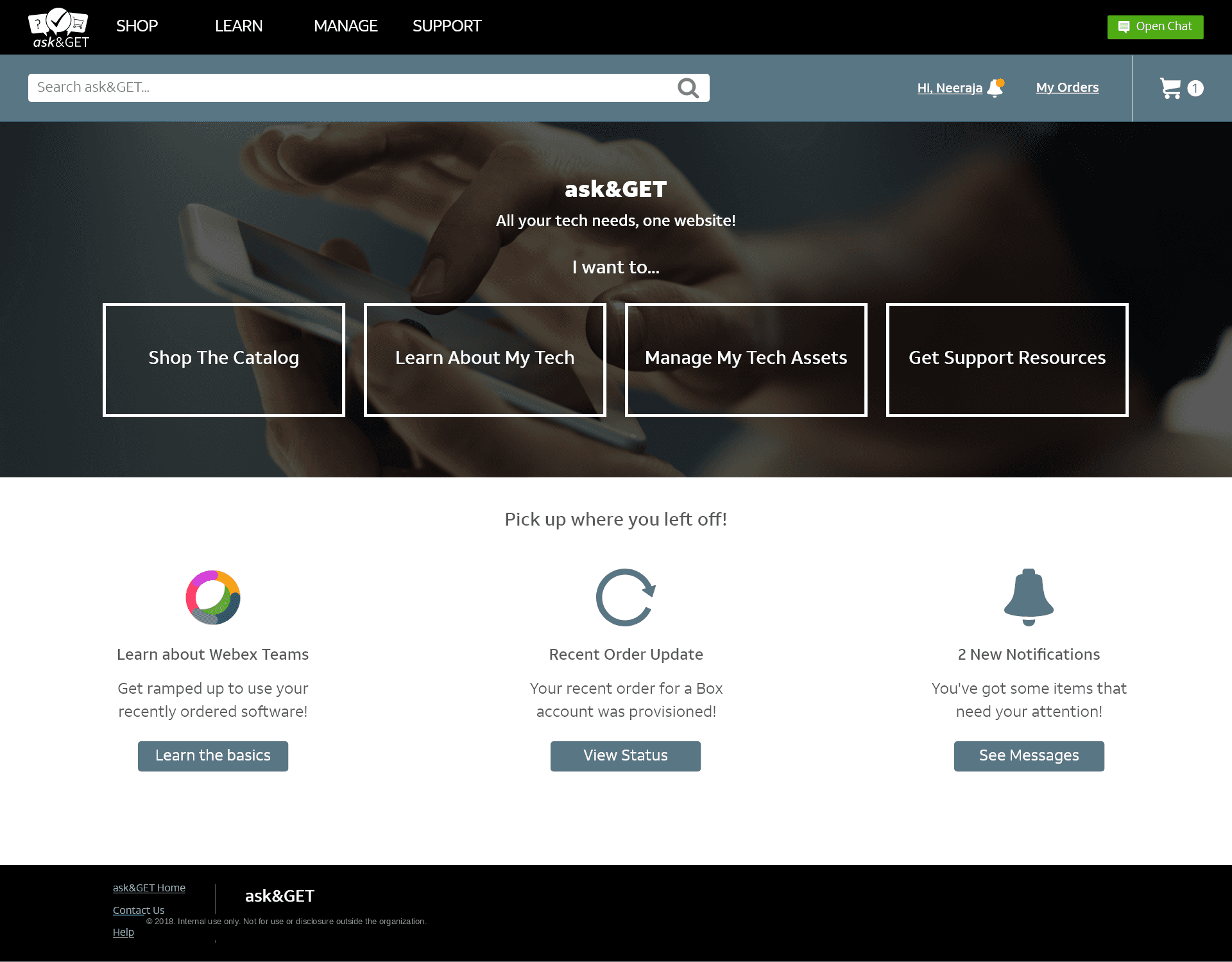
Returning user: Personalized to recent activity
Enterprise users aren't less deserving of good experiences just because the tool is internal.
THE PROOF
Outcomes
ML-driven homepage shifted the platform from reactive to proactive
3500
Monthly orders on a tool people had previously avoided
5 → 45
Products in the catalog — a 9-fold expansion
Primary procurement platform
Used company-wide in AT&T today